

There’s something timeless and deeply comforting about earthy cottage décor. Rooted in natural textures, muted tones, and handcrafted details, this style celebrates simplicity while feeling effortlessly cozy and lived-in.
It invites you to slow down, appreciate nature, and create spaces that feel warm, personal, and authentic. Whether you live in the countryside or a modern apartment, you can easily bring the charm of the earth-toned cottage aesthetic into your home.
Below are fifteen ways to infuse your interiors with the warmth and tranquility of earthy cottage décor and bonus tips to make every space truly your own.
1. Natural Wood as a Foundation

Wood is the heart of any earthy cottage home. Its natural grain, warm undertones, and versatility make it the perfect base for furniture, flooring, or ceiling beams. Choose materials like oak, pine, or reclaimed timber to add authenticity and a rustic touch. Aged or weathered finishes can also bring a sense of heritage, making your home feel grounded and timeless.
Mix different tones of wood throughout your home for depth and contrast. For instance, darker walnut floors can complement lighter birch or ash furniture. The key is to keep finishes matte or lightly polished to maintain a natural, organic look.
Bonus Tip: Use raw-edged wooden shelves or a live-edge dining table to highlight the imperfect beauty of natural wood.
2. Incorporate Pastel or Cool Colors

Pastel or cool hues create balance against the warmth of wood and earth tones. Think sage green, dusty blue, or soft blush — these shades bring serenity and freshness without overpowering the natural palette. They also reflect natural light beautifully, helping your space feel airy and open.
Try using these soft tones on painted furniture, kitchen cabinets, or accent walls. Pairing pastel shades with neutral linens and woven textures can create a layered, harmonious effect that feels both modern and nostalgic.
Bonus Tip: Paint your front door or interior trim a muted pastel to add a charming pop of color that still feels in tune with cottage style.
3. Layer Earthy Neutrals in the Bedroom

Cottage bedrooms thrive on warmth, comfort, and soft layering. Earthy neutrals like beige, sand, and taupe help set a restful tone, while textured fabrics like linen or cotton add coziness. Mixing several neutral shades prevents the space from feeling flat and enhances visual depth.
You can layer throw blankets, pillows, and bedspreads in slightly varied tones for a subtle yet inviting effect. Introduce natural textures like woven jute rugs or raw wood nightstands to keep the look grounded.
Bonus Tip: For extra comfort, drape a chunky knit blanket at the end of the bed to add both warmth and texture.
4. Style with Collected Details

One of the most charming aspects of cottage décor is its love for collected treasures. Whether it’s vintage pottery, handmade ceramics, or framed botanical prints, these pieces tell your home’s story. Displaying collected items adds depth and personality that can’t be achieved with store-bought décor alone.
Arrange your favorite finds on open shelving or a farmhouse-style hutch. Layer objects of varying heights and materials for visual interest while maintaining a cohesive palette.
Bonus Tip: Visit flea markets or antique shops regularly to discover one-of-a-kind pieces that bring character and authenticity to your space.
5. Bring on the Ruffles

Soft ruffles instantly evoke cottage charm. Whether on curtains, bedding, or throw pillows, they introduce a gentle romanticism that feels both classic and cozy. Choose natural fabrics like cotton or linen to keep the look airy and unpretentious.
Avoid overly frilly or glossy materials — simplicity is key. White or cream ruffled bedding pairs beautifully with wood accents and greenery, creating a perfectly balanced rustic-meets-romantic aesthetic.
Bonus Tip: Layer ruffled pillow shams with plain linen ones to achieve a sophisticated, textured look that doesn’t feel overly feminine.
6. Don’t Forget the Baskets

Baskets are not just storage — they’re style statements in an earthy cottage home. Woven from natural fibers like rattan, wicker, or seagrass, they add warmth and texture to every corner. Use them to store blankets, magazines, or even houseplants.
Their neutral tones make them easy to mix and match with nearly any décor scheme. Large floor baskets can anchor empty spaces, while smaller ones on shelves or countertops keep clutter neatly tucked away.
Bonus Tip: Place a woven basket by the entryway to store shoes or umbrellas while maintaining a tidy, rustic aesthetic.
7. Top It with a Quilt

Nothing says “cottage comfort” quite like a handmade quilt. Quilts bring color, history, and craftsmanship into the home, instantly making a room feel more personal. Choose patterns inspired by nature or traditional patchwork to complement your earthy palette.
Layer your quilt over crisp white sheets or neutral bedding for a touch of warmth and visual interest. You can also drape one over a sofa or chair to create a lived-in, welcoming feel.
Bonus Tip: Mix vintage and modern quilts for a curated look that celebrates both heritage and contemporary design.
8. Neutral Tones That Reflect the Outdoors
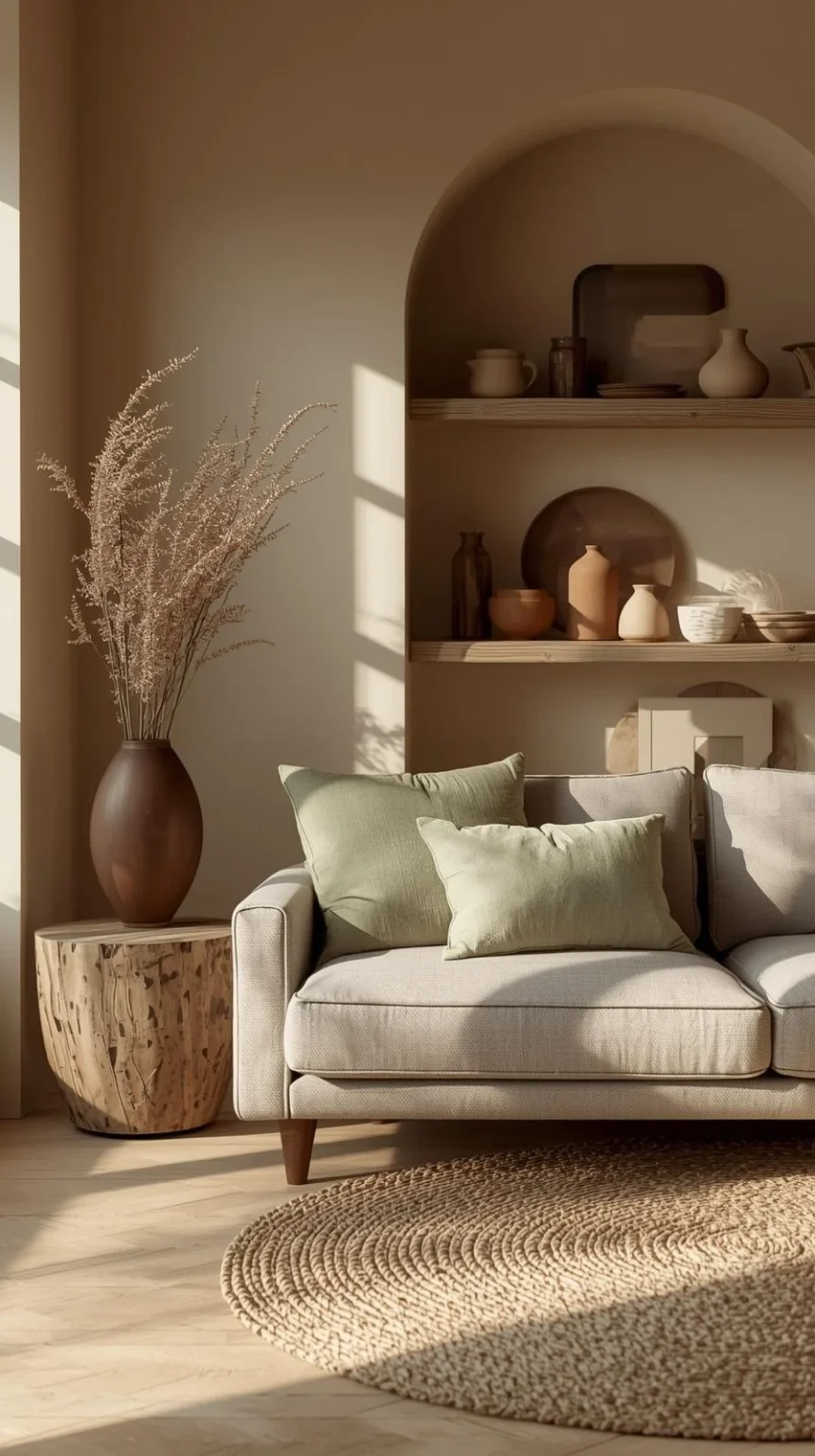
Earthy cottage design draws heavily from the landscape — think clay, stone, sand, and moss. Bringing these outdoor-inspired neutrals inside creates a cohesive, calming environment. These tones ground your décor and make colorful accents stand out more effectively.
You can reflect this palette through wall paint, textiles, or even kitchenware. Combining cool stone grays with warm browns and creams evokes balance and a connection to nature.
Bonus Tip: Sample your paint colors at different times of day — natural light dramatically changes how earthy tones appear.
9. Greenery That Connects Indoors and Outdoors

Plants breathe life into any cottage interior. From potted herbs on your kitchen windowsill to leafy ferns in the living room, greenery bridges the gap between the indoors and the natural world. Their organic shapes and colors bring texture and vitality to neutral spaces.
Use a mix of plant sizes for visual balance — tall floor plants anchor the room while small succulents or vines add charm to shelves and mantels.
Bonus Tip: Choose terracotta pots or woven baskets as planters to keep the earthy theme consistent throughout your décor.
10. Cozy Lighting with a Natural Glow

Lighting plays a huge role in setting the mood for cottage interiors. Soft, diffused light from lamps, candles, and woven shades creates a calming, intimate atmosphere. Avoid harsh overhead lighting — opt for warm bulbs that mimic natural sunlight.
Materials like linen, rattan, and wood in lampshades help diffuse light beautifully, casting a cozy golden glow. The goal is to create a feeling of warmth, as if the room itself is gently illuminated by the afternoon sun.
Bonus Tip: Place candles or lanterns in clusters for added warmth — especially during evenings or rainy days.
11. Soft Textiles with Natural Fibers

Natural fibers like cotton, linen, and wool are essential in an earthy cottage home. They bring breathability, texture, and softness that synthetic materials simply can’t match. Opt for washed linen curtains, wool throws, or cotton slipcovers to create an organic and inviting space.
Layering these materials in varying weaves and tones adds visual interest while keeping the environment cozy and natural.
Bonus Tip: For a touch of luxury, mix in a few handwoven or artisanal pieces — they add subtle craftsmanship to your décor.
12. Decorate With Antiques
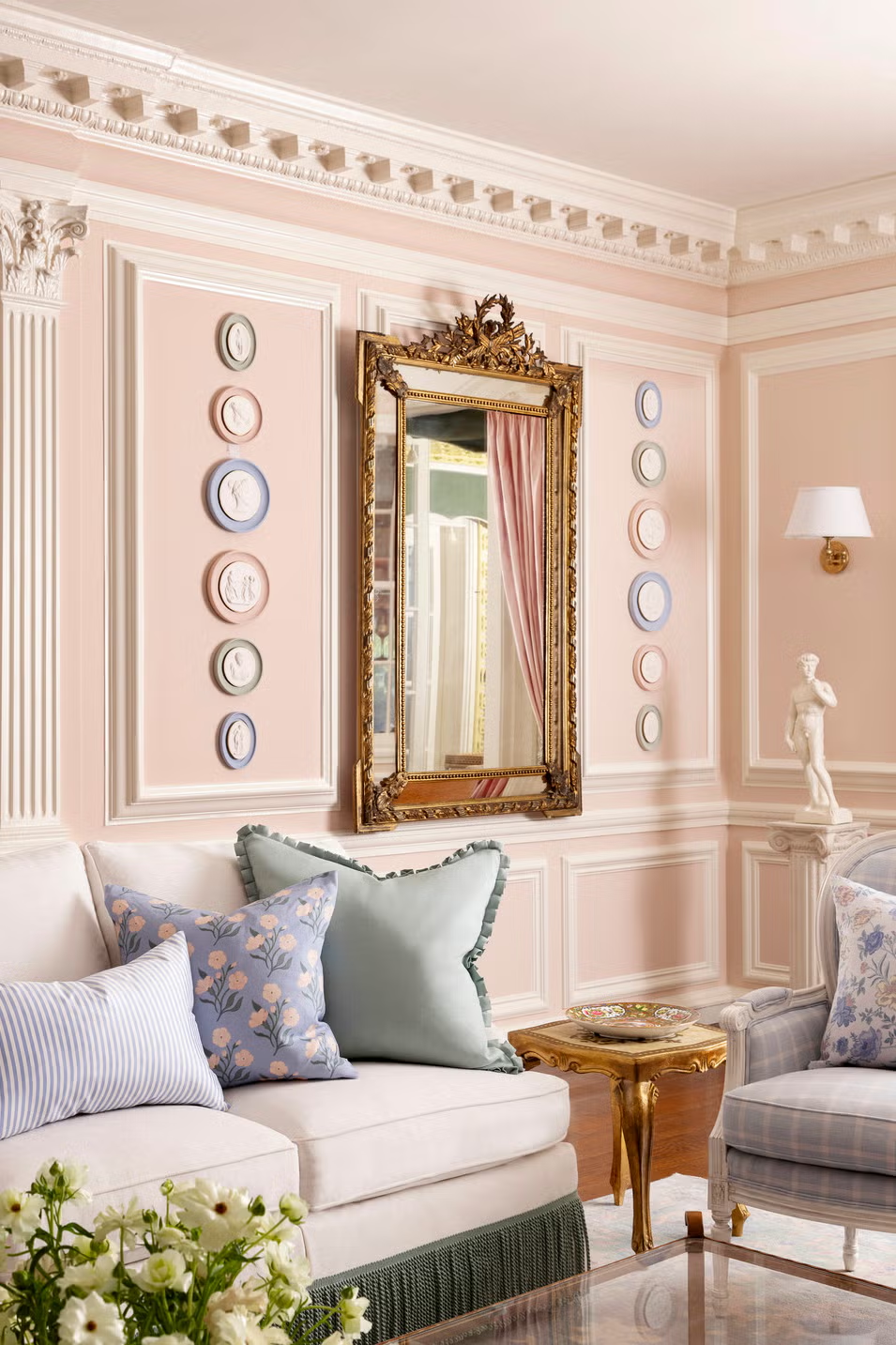
Antiques tell stories and connect your home to history. A well-chosen vintage piece — a weathered dresser, an old mirror, or a rustic dining table — can instantly elevate your cottage aesthetic. The beauty lies in their imperfections: chips, scratches, and patina all add authenticity.
Pair antiques with modern accents to avoid a dated look. A vintage wooden chest paired with sleek ceramic vases, for example, creates the perfect balance between old and new.
Bonus Tip: Mix metals like brass or iron with your antiques for a richer, layered effect that feels timeless yet fresh.
13. Opt for Colored Cabinetry

Earthy cottages often feature painted cabinets in soothing, natural hues. Muted greens, soft blues, or dusty grays pair beautifully with wood countertops and open shelving. This adds depth and charm without overwhelming the space.
Colored cabinetry helps personalize your kitchen or bathroom while maintaining a calm, nature-inspired tone. It’s a subtle way to introduce color in a way that feels authentic and lived-in.
Bonus Tip: Choose matte or eggshell finishes instead of gloss — they better complement the soft, rustic look of cottage décor.
14. Mix Prints and Textures in the Bedroom
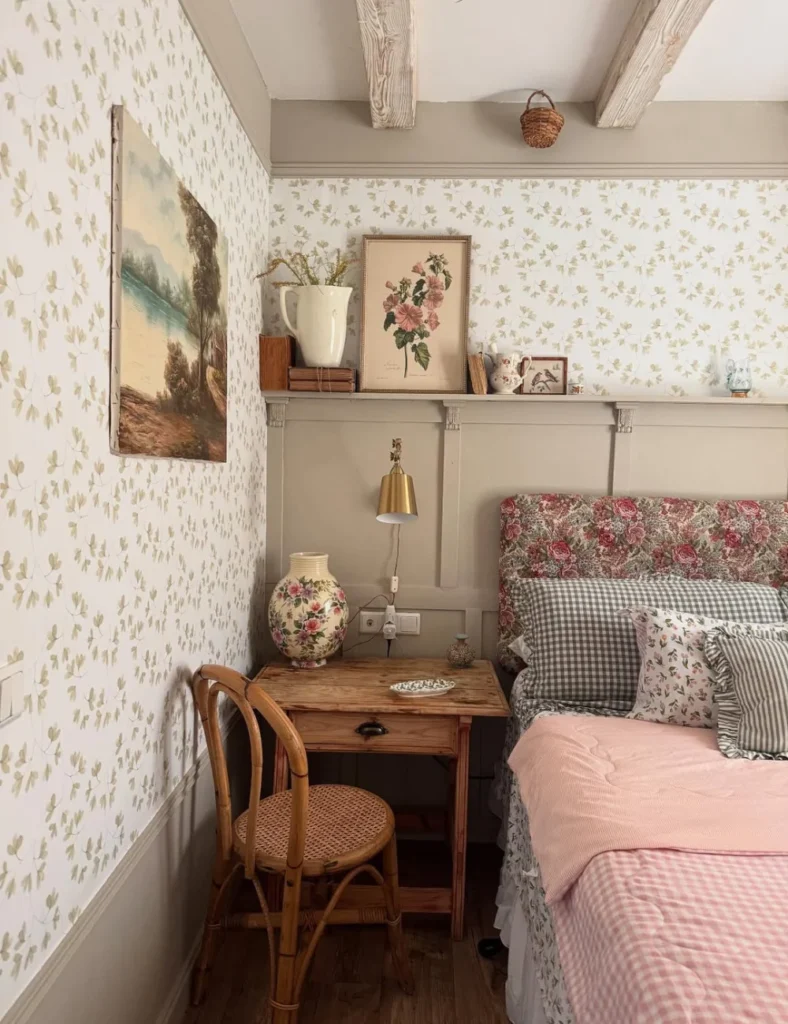
Cottage style thrives on layers — and that includes mixing prints and textures. Florals, stripes, and checks can coexist beautifully when kept within the same soft color palette. Pairing these prints with natural materials like linen or burlap creates a cozy yet refined bedroom.
The secret is subtle variation. Combine different scales of pattern — small florals with larger stripes, for instance — to add dimension without chaos.
Bonus Tip: Keep your base bedding neutral, then use printed pillows and throws as accents for easy seasonal updates.
15. Paint Millwork in Muted Tones

Painting millwork — trim, wainscoting, or built-ins — in muted tones gives a space a polished yet relaxed finish. Shades like mushroom beige, dusty sage, or warm gray can highlight architectural features while keeping the overall look soft and cohesive.
This technique also helps define spaces in open-concept homes, creating subtle transitions without harsh contrasts.
Bonus Tip: Choose a shade slightly darker than your wall color for a layered effect that feels intentional and inviting.
Final Thoughts
Earthy cottage décor is all about creating a connection — between your home and nature, between modern comfort and timeless charm. With a few thoughtful choices in color, texture, and materials, you can transform your space into a warm, grounded retreat that feels both elegant and personal.

Meet Mike O’Connor, (a DIY enthusiast), living in Cincinnati, a city ranked as the noisiest in the USA.
As a work from home dad, I have a first hand experience of how noise can truly affect your well being.
Soundproofing isn’t something that should be taken as a hobby, it should be a skill that every homeowner should be equipped with.
Most of the work documented on this blog comes from purely first hand experience, and the products recommended work as indicated.