

Dark cupboards matched with deep-toned flooring give off a bold vibe – stylish yet down-to-earth. When done right, it doesn’t feel dull; rather, it adds warmth, coziness, and a fresh contemporary edge. Check out what’s behind this eye-catching shift – we’re breaking it all down here.

Exploring Dark Kitchen Cabinets with Dark Floors
A mix of blackish cupboards with nearly black flooring builds mood through contrast. Instead of avoiding dimness, this setup leans into it, picking bold shades such as roasted brown, near-black gray, jet, or very dark blue to ground the space firmly.
What you get is a cooking area that gives off swanky diner or private lodge energy – sharp without trying too hard.

A lot of folks think using dark colors together will turn a room into a dim hole. But actually, if you mix in proper textures along with smart light choices, it can feel warm and snug instead – kinda like a cozy hideout people want more these days, especially after living with cold, bare white kitchens for ages.
It’s all about mixing things up just enough – add some grain, shiny bits, or well-placed lights so the whole thing doesn’t look dull.
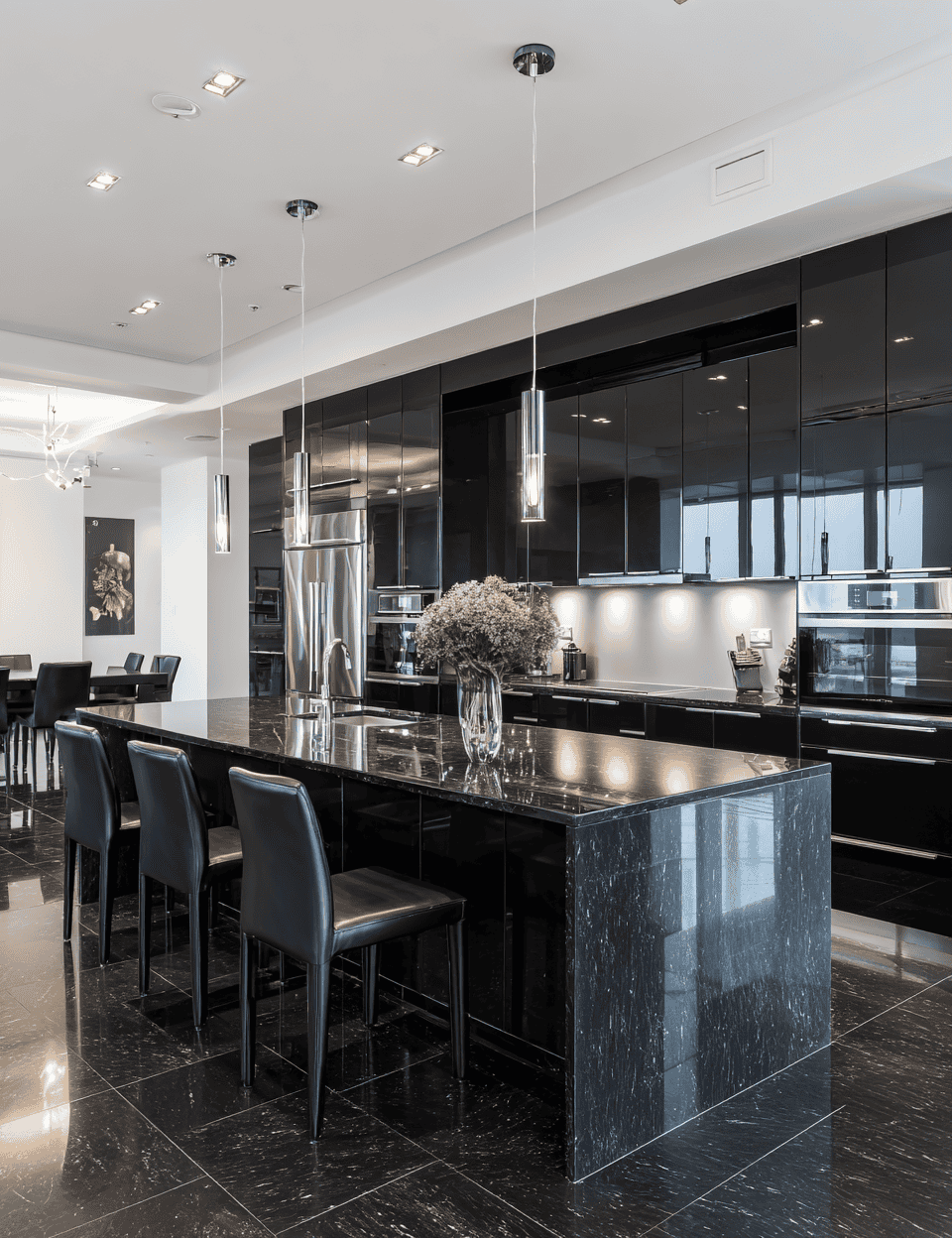
This style fits best in open-floor homes, where cooking zones blend into lounging or eating spots – thanks to the deep tones holding things together. Lighter seating or walls nearby stand out more because of it. A bold move? Sure – but one that quietly shows you’re sure about your taste.

What Color Kitchen Cabinets Go with Dark Floors?
If you’ve got dark flooring – like ebony hardwood, charcoal vinyl planks, or flat black porcelain tiles – the smartest pick for cabinets is sticking to similar deep shades. Go for rich espresso, dark gray, almost-black wood hues, or solid black; they blend smoothly without clashing. This look ties everything together naturally, giving off a clean yet bold vibe.

Still, contrast looks amazing sometimes. Take navy cupboards beside almost-black flooring – it’s a go-to now, particularly in homes blending classic and beachy styles.
A slight shift in shade (icy blue next to earthy dark brown) feels rich but stays smooth on the eyes. In the same way, darker greens like moss or pine are getting popular, bringing in calm, natural charm.

If you’re after some flair but don’t want to go all in, try split-color setups – dark base units sitting on dark flooring, while top ones stay pale or use bare shelves. That way, the room still feels light even with strong low tones. Flat black handles and taps pull it all into place without fuss.
Do Dark Cabinets Make a Kitchen Look Small?
This issue tops what most homeowners worry about – and here’s the deal: everything hinges on how it’s done.

Sure, if your kitchen has bad lighting, solid black cupboards, zero shiny elements, or gloomy counters, it’ll likely look cramped. Yet when dark tones are used with care, the room frequently appears way more open than you’d think.
The key is how surfaces bounce light. Shiny or slightly shiny cabinets scatter brightness across the space.

Countertops like quartz or marble, especially ones with streaks – think Calacatta Viola or bold soapstone. toss light back into the room. Big floor tiles, spaced tight with hardly any grout gaps, stretch out visually so the ground looks bigger.
On top of that, good lighting isn’t optional. LED strips under cabinets, big hanging lights, built-in ceiling spots, or glowing base trims can change a dull kitchen into something bright and striking at night.

These days, plenty of pros add glow-behind shelves or light-up glass doors – using shadows creatively instead of fighting them.
What Is the Best Flooring for a Dark Kitchen?
Flooring matters a lot when you’ve got dark cabinets. Top picks usually fit into one of three types – deep-toned real wood, big tiles made from porcelain, or thick vinyl planks. Every option changes the room’s vibe in its own way.

Flooring made from real hardwood in rich tones like walnut, wenge, or dark oak still feels the most inviting and genuine. Planks that are 7 to 12 inches wide bring quiet depth without clashing with kitchen units – especially when finished flat or with oil.
Instead of shiny surfaces, more folks now go for a soft look. Dark-stained European white oak, near black or charcoal shades, stands out because it fits modern spaces better.

A cheaper yet stylish choice? Try big 24×48 porcelain tiles – they feel clean and fresh. Go for flat black, deep gray, or concrete-style finishes; they blend smoothly if you use matching grout lines. Some newer models even copy rich wooden patterns but don’t need sanding or sealing like real wood.
Key Elements of Dark Kitchen Cabinets with Dark Floors
Success here depends on contrast, texture, or how light plays in. Skip one – maybe two – and the space can feel dull or closed off.

Try swapping out countertops first; they boost dark cabinets fast when you go light or use wild patterns. Most folks pick white quartz with faint gray streaks, yet some now lean toward punchier options like Taj Mahal quartzite – or rough black granite packed with swirls.
Metal finishes? They’re a solid choice. Try brushed brass or old-style bronze – they cozy up grayish-black, deep blue, or pitch-dark cabinetry.
If you’ve got rich browns like espresso or walnut, go with shiny nickel or chrome for that clean pop. Tossing together different metals – say, golden knobs next to a silver sink – gives it a fresh vibe.
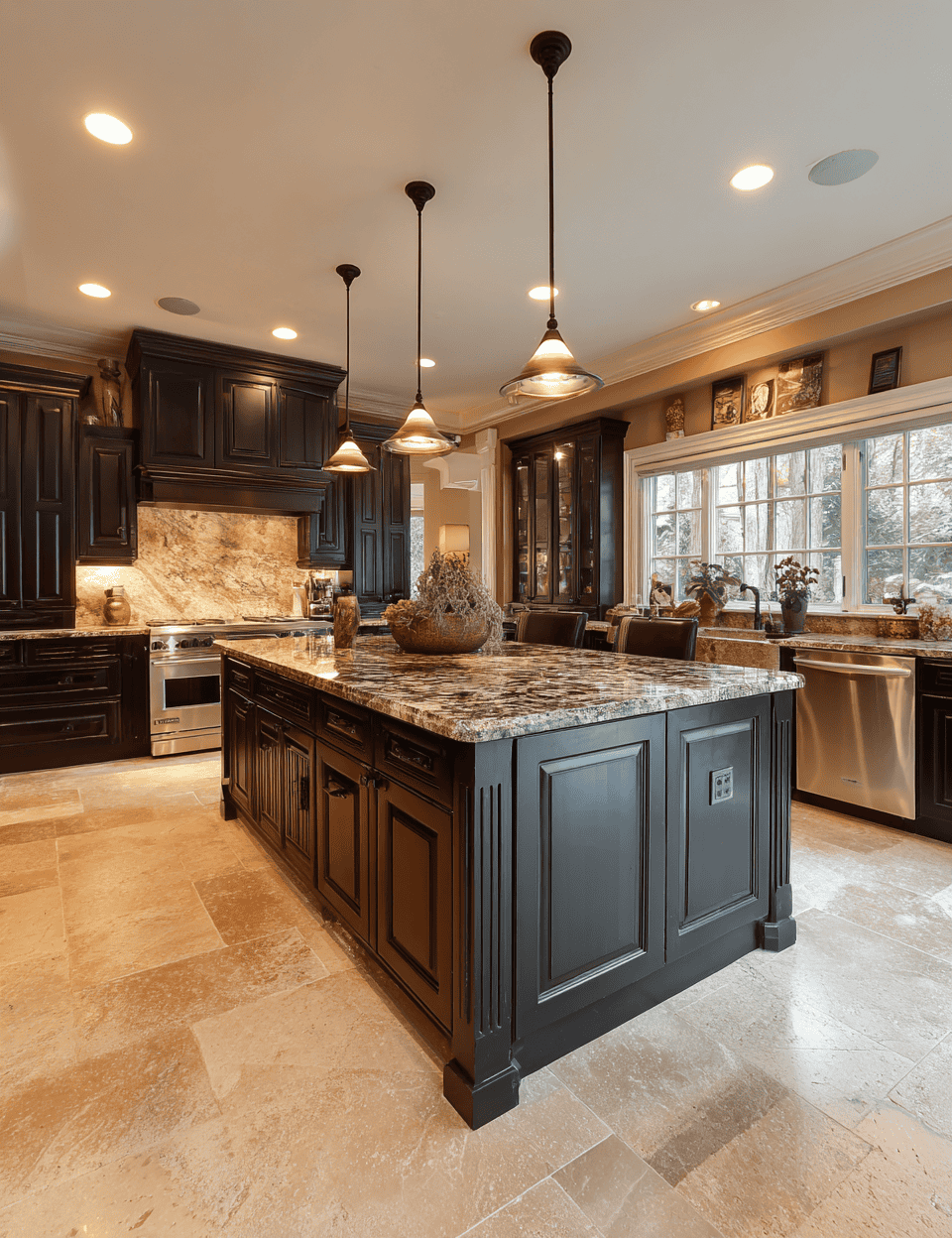
Use real textures when you can. Try light oak shelves instead of cabinets, pick barstools made from rattan or leather, go for linen roll-up blinds, or add a countertop with an organic wood edge to keep things warm and relaxed. Toss in some greenery – like big fiddle-leaf figs or split-leaf philodendrons – to give energy and mellow out bold colors.
Choosing Dark Kitchen Cabinets with Dark Floors
Start with what’s fixed in place. Got dark wood floors? Work around them instead of pairing with pale cabinets – they’ll highlight every bit of dust.

On the flip side, building from zero? Think about upkeep – you’d need constant wiping to keep black matte units looking clean, but rougher wood-like surfaces handle scuffs way better.
Picture how sunny your kitchen gets. If it’s on the north side and shady, dark gray or near-black works just fine.
Rooms that catch afternoon sun from the south or west? Try warm shades – like rich brown or charred timber – so things don’t feel too chilly when the light floods in.
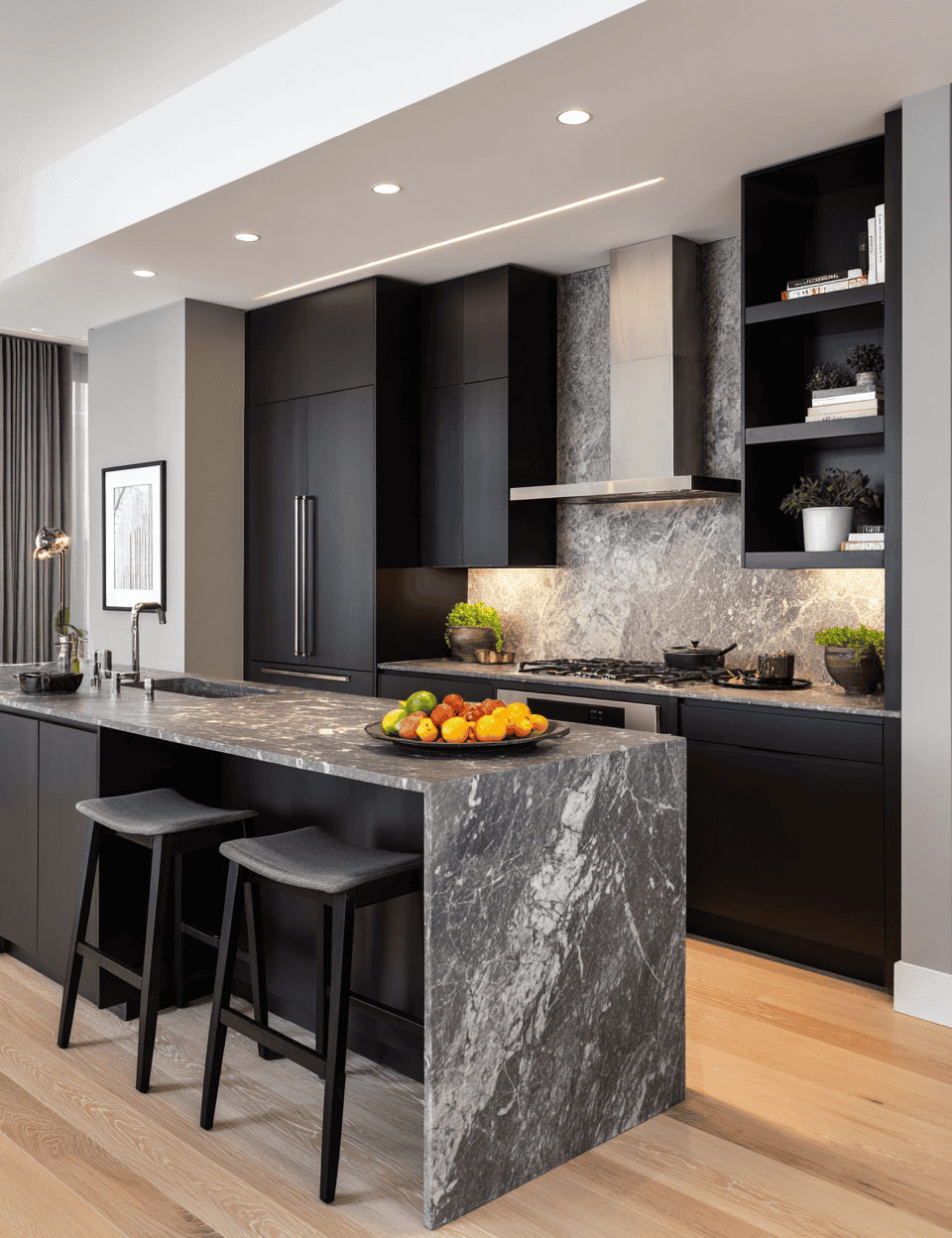
Think about how you live. Parents with little kids usually go for darker flooring because it covers scuffs and messes better – team those with mid-tone cupboards like navy or gray instead of pitch-black ones so you’re not wiping them down all day. Surfaces that resist smudges plus built-in grips? Total lifesavers when things get hectic at home.

Modern Dark Kitchen Cabinets with Dark Floors
Nowadays, dark kitchens aren’t like those old Tuscan-style ones from the 2000s. Smooth edges, no handles on cupboards, along with built-in gadgets shape how they look.
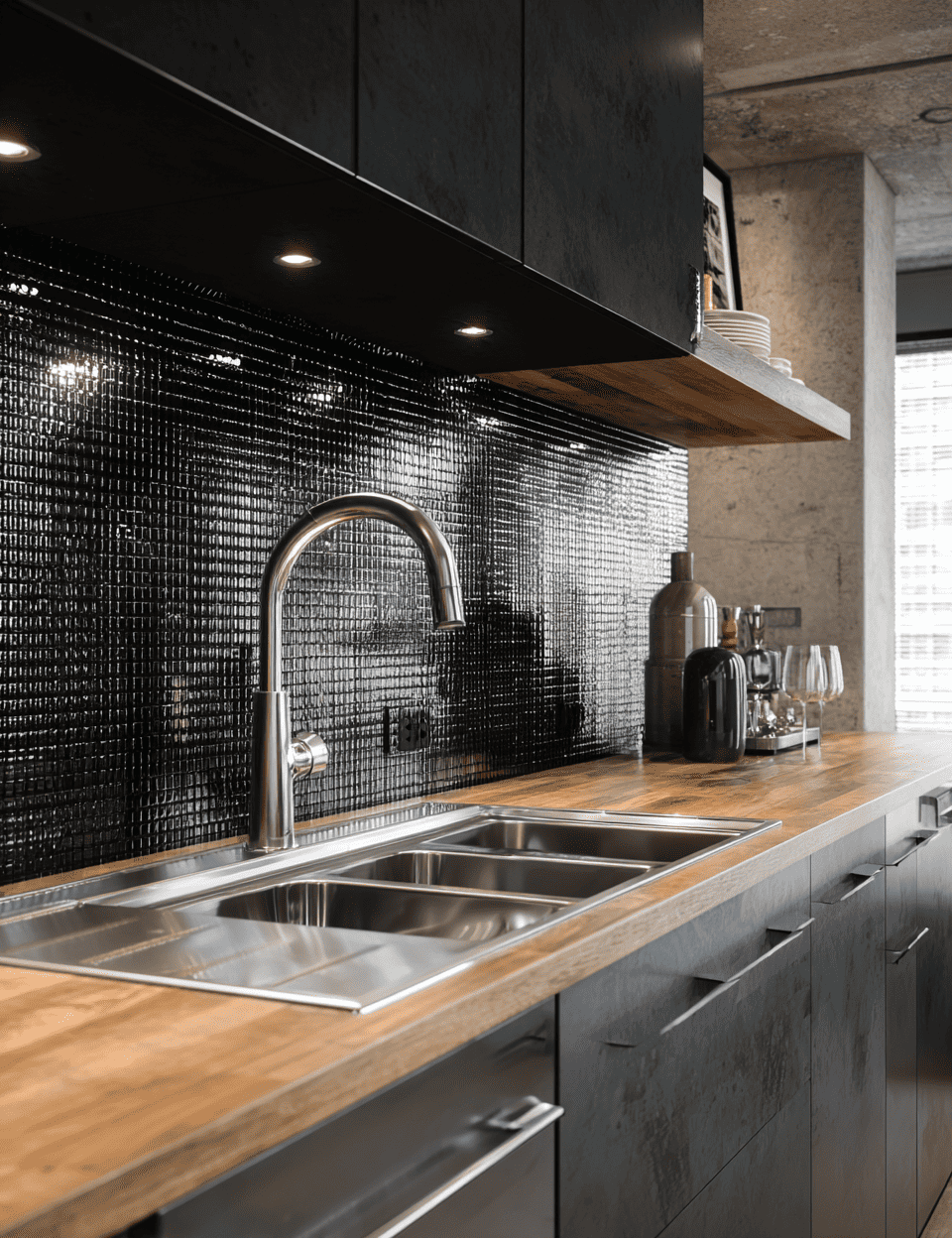
Picture flat-front or solid doors in dull black or near-black gray – matched up with counters that drop down like a waterfall plus super-simple fixtures – or maybe nothing visible.
Folks used to love black stainless gear, but now they’re swapping it for hidden fridges or sleek dark gray tones that fit right in. Storage got smarter – slide-out shelves, built-in trays, even tucked-away spots for gadgets – so everything stays neat without fuss.

The trend of “blackened minimalism” mixes Japanese with Scandinavian vibes – think shou sugi ban timber touches, dark steel vents, yet raw concrete or terrazzo bits. These kitchens seem less about cooking, more like gallery pieces.
Creating the Perfect Mood for Dark Kitchen Cabinets with Dark Floors
A dark kitchen? It’s really about vibe, more than anything. Think this: a supermarket-style setup with harsh lights versus stepping into a low-lit hideout – both get the job done, yet only one hits different. Go with that feeling.

Use different lights like in movies: soft ceiling lamps for mood, bright strips below cabinets for chopping or reading recipes, while tiny spotlights inside glass shelves highlight fancy plates.
Everything should have dimmer switches – crank it up when you’re prepping food, turn it down low when friends come over.

Pick your extras with care. A couple of big clay pots, dark non-shiny pans shown off on bare racks, or one bold painting keeps things from looking hollow. This kitchen doesn’t beg to be packed – silence between objects gives it life.
Dark cupboards paired with deep-toned flooring won’t suit all tastes – yet folks who go for it gain rich vibes no bright kitchen delivers. Nailed correctly, they’re more than good-looking – they hit different, cozy even.


Meet Mike O’Connor, (a DIY enthusiast), living in Cincinnati, a city ranked as the noisiest in the USA.
As a work from home dad, I have a first hand experience of how noise can truly affect your well being.
Soundproofing isn’t something that should be taken as a hobby, it should be a skill that every homeowner should be equipped with.
Most of the work documented on this blog comes from purely first hand experience, and the products recommended work as indicated.